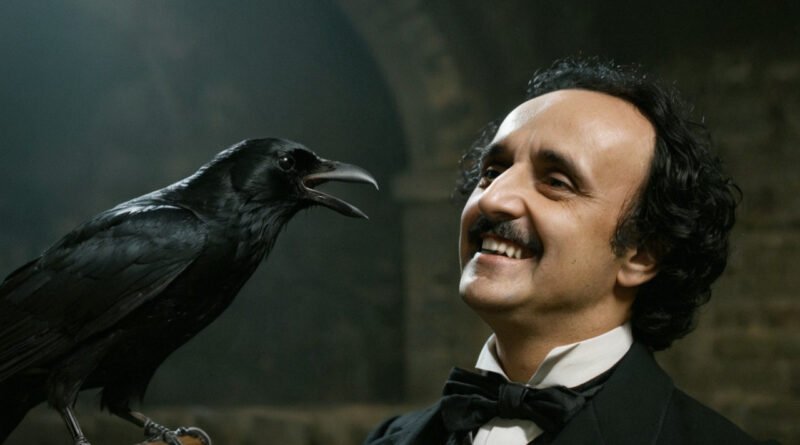
Edgar Allan Poe Was Actually Jolly, New Research Claims


For nearly two centuries, Edgar Allan Poe has been regarded as literature’s most reliable source of melodramatic gloom. Generations of students have been taught to imagine him sitting in a shadowy room, quill in hand, pausing only to cough mournfully into a handkerchief. However, newly uncovered documents are challenging this longstanding view. According to a growing number of scholars, Poe may not have been a tortured ghoul at all. In fact, they argue he was surprisingly cheerful.
The reassessment began when archivists at a small university in Maryland uncovered a set of letters believed to be written by Poe during a period of alleged despair. Instead of the expected broodiness, the letters contain descriptions of pleasant breakfasts, mild gossip about neighbours and several instances of Poe expressing delight at seeing dogs in the street. One passage even mentions him laughing so hard at a poorly made meat pie that he had to “sit down from the intensity of mirth.”
This discovery prompted academics to reexamine other materials long overlooked. A diary entry from a contemporary describes Poe telling “reasonably good jokes” at a dinner party and being “unexpectedly genial for a man whose reputation suggested he might be hiding a raven up his sleeve.” The most striking find is a note scribbled in the margin of an early manuscript of The Tell-Tale Heart, in which Poe appears to have doodled a smiling sun wearing a hat.
Scholars insist that this new image of Poe as a fundamentally pleasant individual does not invalidate his literary contributions. Instead, they propose that his talent for horror may have come from an overactive imagination rather than lived misery. One researcher speculates that Poe might simply have enjoyed the theatricality of gloom in the same way modern audiences enjoy horror films, slipping into it as a form of creative play before returning to his everyday good spirits.
Despite mounting evidence, some critics remain sceptical. They argue that centuries of cultural expectation cannot be undone by a few cheerful fragments. Yet the evolving portrait of Poe is gaining traction with the public. Social media users have begun circulating the hashtag PoeWasFun, accompanied by images of the author edited to show him smiling faintly or wearing colourful scarves. Sales of his works have also seen a minor increase, possibly due to renewed curiosity about the newly vibrant man behind the canon.
The debate is expected to continue, but if the new findings prove accurate, it may require a considerable rewriting of how we understand one of America’s most famous literary figures. Rather than a grim poet consumed by despair, Edgar Allan Poe might have been an imaginative optimist who occasionally liked to frighten people for the fun of it.